Monday, June 9, 2014

A Break in Hungary

After completing our interviews in Romania, we left behind busy cities, rural communities, and forested mountains. The questions I took with me were not as easily dismissed. How does one make sense of the mutual mistrust among Hungarians and Romanians? How does one understand "Roma "Castles" and anti-Roma sentiment? Does the residue of communism shape the present?


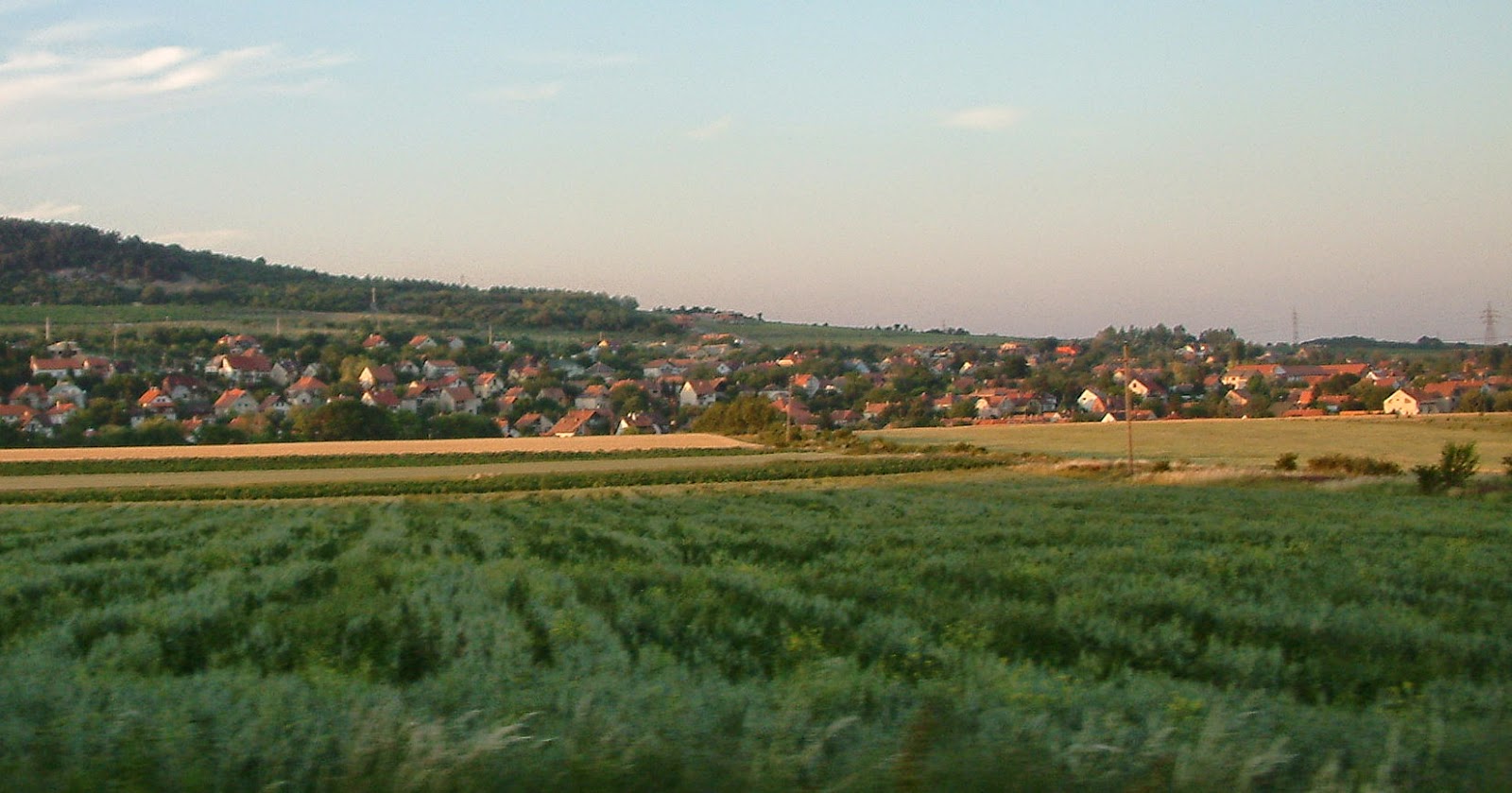
It was still a warm day when we crossed into Hungary. We were all ready for a break and stopped at a town market whose name I cannot remember, but it is a typical Hungarian town market.


Evening brought us into the outskirts of Budapest. 


The next day I spent exploring the Budapest, truly a lovely, historic city. The Matthias Church restored during the 19th century is spectacular. The Liberty Bridge was one of the many 
Danube River bridges rebuilt after World War II


Today I wonder even more about questions Hungarians might ponder if they visited the U.S. Would they question the poverty in our cities? Our attachment to guns and violence? The aging and pockmarked roads and highways? Our raging political divisions?  

Wednesday, May 14, 2014

Psalm 23~God is My Waiter

When we translated Ferenc Visky's interview, I was struck not only by the originality of his understanding of the Psalms, but also by his awareness of God's presence in his life - even as he recalled events that were decades old. He, like many others no longer within the walls of Gherla Prison, lived in the shadow of the secret police, the Securitate. He once described his release as going from a smaller one into the larger prison of Romania. To maintain a tone of terror in this prison world, the Securitate could demand admittance to any home, anywhere, anytime. Considered enemies of the state, the Visky family was a regular recipient of such visits. 

Psalm 23

Ferenc Visky~June 2003
In 1980 we were free from prison but had another house search one day when we were having breakfast. Five people entered, secret police from Bucharest. One was an important officer; it was a very distinguished group. After they entered, they showed us their permit to search. I said, OK, and we continued having breakfast. We asked them to have a seat in another room because there was no place for them to sit in our breakfast room. They declined and instead chose to stand in the room with us.

So, we continued with our breakfast. I could see that they were uncomfortable with the situation, standing and watching us calmly eating. We should have been the uncomfortable and anxious ones, but they were. This was good. Then we started to talk and I told them that I had known that they were coming that morning because I had read Psalm 23 in my Bible that said, “The Lord is my shepherd, I shall lack nothing. Even if I am in the valley of the shadow of death etc. etc. etc. I told them that this was a treasured psalm for me.

The officer  looked startled and asked me how I knew. I didn’t need to be asked twice, so I began to explain. It meant a great deal to me, I said, that in the Word you can read, ‘You make the table for me in the presence of my enemies. My cup is full and I have no fear even in the valley of death because I know you are with me and your hand holds my hand.’ I told the officer, Usually in a situation like we are in, the appetite of the man about to be arrested is always gone, but now you brought my appetite instead.

They looked puzzled, so I had to tell them that I had a good appetite because the text says that God is the one who prepares my table. So, I continued, God is my waiter today or I should say, host. Please understand that God is very near to us, but he doesn’t always put on the table the sort of meal that I really like. For instance, presently, I do not really like what you officers are going to do with us after a few moments, but I’m not looking at the things that are on the table. I’m looking at Him who put you on my table, and this is why I have a good appetite. And this is important to me, that I can be liberated this way at such a moment. This is the message of Psalm 23.

Thursday, May 8, 2014

Ferenc Visky: Reflections on Psalms 115 and Psalm 90


Because the interview with Ferenc Visky had been rescheduled, the team spent a few days in Hungary and Slovakia and then returned to the Visky home in Oradia/Nagyvarad, for our meeting. Watching him speak throughout the interview made me wish that I could have been present for one of his sermons. Rev. Visky must have been an expressive preacher because he was always in motion; his gestures and facial expressions revealed how involved he was in the Word and with the words he was speaking.


Not to us, O Lord, not to us
But to your name be the glory,
Because of your love and faithfulness
Psalm 115:1 (NIV)


Ferenc and Julia Visky ~June 2003
When we became engaged to marry, the psalms showed up in an interesting way. The once-engaged person is sitting here with me now. Fifty-six years ago we were looking for the confirmation that we belonged together and that we had tasks to do together. We remembered words from Psalm 115.  At that time we had decided to turn toward Romania, and we knew that our field of service would not be in Hungary but in Romania where my father used to be a pastor. It was very good to be in harmony in this and to know that the true meaning of our service would happen under this quote, “Not for us O Lord, but for your name. Soli Deo Gloria. And we wished and we do wish that this will stay with us always.


Teach us to number our days aright
so that we may gain a heart of wisdom.
Psalm 90:12 (NIV)


Maybe I will not tell the stories chronologically - so I am jumping in time now. I would like to tell you about the marriage of my grandchild. He is a pastor, by the way. At his wedding we received a message from Psalm 90, the well-known verse, “Teach us to count our days that we can get a wise heart.” 


According to the text here, we can say that it’s well-known, but I think a verse has to give a new meaning each time it’s read. We usually say that, well, it’s a familiar and well-known verse so I do understand the message. But I think we can’t say this. I won’t tell you the whole preaching here, just some parts of it. First of all, the first words say ‘Teach us.’ It means that I have a need of teaching because I don’t know, because I am standing in front of things that I don’t understand. I don’t know how to be a husband, how to be a wife, how to be a pastor, how to preach, how to be a grandfather.


There were some church leaders present at that wedding, so I preached to professors and to lay leaders of the church district too, the curators. But it was their misfortune that they were present. I preached that I really don’t know how one can be a curator, a professor, or a bishop, and it’s high time to study how to do these things; a whole lifetime is necessary to learn these things. This message alluded to my family’s history.


Monday, May 5, 2014

Contrasts in Culture


On this trip, I left Romania trying to make sense of the many contrasts. Here are a few.

Rural and Urban


Old and Young


Ruined


. . . and New


Saturday, May 3, 2014

On the Way Home

We were on our way to Nagyvarad/Oradea, when we received a phone call postponing the interview with FerencVisky. We were disappointed, but it was also a relief. I for one was satisfied with a break from the intensity of the previous days. I think the others were quietly relieved too, and the van was peaceful during the long trek home. And then . . . next to the highway, about halfway to the border – I’m not sure who spotted them first –  two men were shearing sheep.


I think we were all happy to stop – no conversations, no differences,  no questions – just cameras. The men were methodically shearing a pen full of sheep with hand clippers.  


That was in 2003. I don't know whether they use the same techniques today, but I was impressed!                                                                               

Thursday, May 1, 2014

Still in Romania ~ With Istvan Tokes

I looked forward to the  prospect of meeting Professor Istvan Tokes, father of Laszlo Tokes, the Reformed pastor famous for his courageous stand against Romania's Communist dictatorship.


Professor Istvan Tokes - June 2003
Professor Tokes, a retired seminary professor, welcomed us with a warm, firm handshake, a delighted smile, and glass of his own sweet wine. The crew set up quickly, and Andras placed him in front of his desk, surrounded by books. Plaques of Reformers dominated the wall behind him.

We politely mentioned the names of the people who had already been interviewed as well as the names of those still on the list. We reviewed the reason the interviews had been
 set up – to understand the survival of faith and the way that the Genevan Psalter reflected the suffering and the survival of the Reformed believers.

The Entryway
Apparently eager for polite introductions to be over, he seemed pleased when the interview began in earnest in Hungarian. I could sense that the topic we proposed was only tangentially related to other questions and topics important for him. The translation proved that I had guessed correctly. The long version of his
Rev. Laszlo Tokes
interview is being edited for inclusion in a book. It will include his discussion of the episcopal structure of the Reformed Church in Hungary and Romania, the confessing church vs. the folk church, and theological influences that shaped the response to the Communist dictatorship.


I’m not sure how long this interview lasted, but when it was over, Tokes spoke for a few minutes in English. Urged to comment on the Genevan Psalms, he spoke briefly, sort of an afterthought, I think. “The psalms,” he said, “were and are very important today in the church liturgy. They are loved by church members and sung with joy. Although there are only 40 Genevan psalms in the version most used by Reformed churches in Transylvania, these 40 are well-used. He explained that after WWI a new psalm book was required, and the committee appointed to handle the revision decided to include more hymns, choosing only those psalms that are most easily sung and understood.

Although the psalms are excellent literature and can stand on that basis, they should also be understood to contain the Word of God. Singing the Psalms is important only to the extent that singing conveys the meaning of the psalms. Singing was and is not as important as the preaching.” Spoken like a true preacher.


With that, we all stood up and stretched. While equipment was being dismantled, Tokes showed us his rosegarden and cut two long-stemmed roses, one for Bernadette and one for me.

Ah! He loved flowers; he was a gardener too.


Tuesday, April 29, 2014

In the Words of Klara Dobri

A few years ago, one of my Hungarian friends told me that the stories of women were often overlooked, and she asked me to be on the alert. This entry serves as an introduction to Klara Dobri, a courageous and strong woman who cared for six young children while her husband, Janos Dobri, was imprisoned between 1957 and 1963. She managed to support her family by working long hours as a district nurse while additionally caring for ill and aging parents. Due to the terror that crippled social relations in Transylvania, most church members were fearful, and few offered encouragement or support. Here is just a short excerpt from our visit in June, 2003.

Klara Dobri, June 2003

Still in the city of Kolozsvar/Cluj, the dawn of a new day brought the prospect of meeting Klara Dobri, the widow of Janos Dobri known to me by this time for his daring underground exploits. Having met her first in March 2003, I was ready to see her again, though by this time I was aware that it would not be easy for her to retell a painful story.

When we arrived at her door, she welcomed us into her home and waited quietly while the team set up. Her son hovered nearby, concerned, perhaps, that revisiting events of long ago would overtax the stamina of his 85 year old mother. We promised to be aware. Determined to tell the whole story, her voice remained clear and calm and never faltered throughout the interview.


Her first words were, “In our life faith meant a lot. We had a hard life.” With those words, it became clear that we would not hear just her story, but theirs, the story of Klara and Janos Dobri.

*          *          *          *          *

The year 1957 was notable because it marked an intensification of repression in Romania. Though Janos had been interrogated and imprisoned twice after his return in 1948, the evidence presented never established his guilt. In 1957 he was arrested and accused of typing and distributing poems and behaving as a rebel. After the failed 1956 revolution in Hungary, even a semblance of justice disappeared in Romania. Anyone known or suspected of harboring pro-Hungarian sentiments was labeled an enemy of the state. Janos was arrested, sentenced, and sent to a labor camp, part of the Danube Delta system and then later to the Szamosujvar/Gherla prison.

Janos Dobri
With Janos gone, Klara faced the enormous challenge of providing for six children in a nearly impossible situation. They were living in a world where fear ruled. Seminary professors still in their positions didn’t speak to Klara, afraid to be associated with a victim of the system. The seminary provided their lodging; no-one had the heart to throw out a mother and six children, but they provided little else. She fondly recalled the generous encouragement provided by Andras Nagy, by that time retired from the seminary. She also remembered that Istvan Tokes had written a letter on their behalf. However, many of her husband’s former colleagues chose to look the other way when they met her, afraid to risk the attention of the ever-present securitate. During all those years, Klara worked as a district nurse. Because she visited different people at different sites, she had the flexibility to drop in on the children sometime during the day.


Klara described the situation at home. Life was hard for everyone, so we did not have high expectations. There was no time to think. Life must go on. You must give food to the children and you also have to work. Sometimes my brothers and sisters brought food from the countryside. Sometimes a loaf of bread with some fat on it was all we had. 
*          *          *          *          *


When Klara talked about faith she said, “One should trust in the future because, truly, only God can help us in all things. If we trust, he helps us.” When asked whether music and the psalter supported her faith, she smiled and responded, “Even now I have the psalm book beside me. During evening prayers I usually sing a few songs. I have my hymnbook and the Bible beside my bed. Every evening I am engaged with them. Now-a-days I can’t remember all the verses. Sometimes I cannot catch a line and have to look it up. I never used to forget anything, but now, sometimes, I can hardly remember names and . . .. After all, human life ends, and we must acquiesce. But it was without hesitation that she named her favorite, Psalm 25 - Lord to you my soul is lifted. Let me never be ashamed.  I like others too, she added. I used to love singing, but now my voice is gone and I sing only for myself.

As the interview came to an end, Klara asked, “Have you recorded all of this?” When she heard an affirmative reply, she nodded and said, “So this cannot be denied.”


Sunday, April 27, 2014

Introducing the Viskys


Julia and Ferenc Visky, September, 1974
Though there was plenty of suffering and guilt to go around in Romania,  I would like to focus on Grace through excerpts from the story of Julia and Ferenc Visky, especially his reflections on the Psalms. If you would like to learn more than I include here, search for Ferenc Visky on the internet. You will find dozens of articles and references. First, though, a bit of context.

Reformed Differences


While the Fulops represent the classically Reformed, Ferenc and Julia Visky would fall within the renewal wing of the Reformed church. Following World War II, the remewal branch, sometimes called Bethania, experienced a powerful revival that touched thousands in Hungary, Romania, and Transcarpathia, Ukraine. By 1950 the movement had been forced underground by Communist persecution. Its leaders were kept under surveillance, and by 1958, many had been arrested and sentenced, some up to 22 years, including Ferenc Visky. Because of her continuing witness, Julia and her seven children were soon after sent to one of the camps of the infamous Danube Delta gulag. Their son, playwright Andras Visky, told her story in the play, Julia.


March 2003


When we first met Julia and spoke with Ferenc Visky, I soon sensed that they lived and breathed in the presence of God. It was also apparent that one needed to be ready for his sharp wit. We had crowded into his small study close to the kitchen, and with a gleam in his eyes Visky began,

“Come, let us get close together like small piggies in this small room. I don’t mean that you are pigs; I don’t want to begin by hurting anyone . . . If the shirt doesn’t fit, don’t wear it!”

I described our mission of recording his understanding of faith and his perception of how the psalms reflected his life under Communism. The gleam had not yet disappeared and Visky inquired sweetly whether my congregation back in Grand Rapids ever sang any of the Genevan Psalms. Sensing a trap, I answered quickly that we sang some, but never Psalm 119 in its entirety.  He smiled and appeared satisfied with my answer. Having thus established that we were not complete nincompoops, the conversation could begin.

Regarding the Genevan Psalms


“From a biblical perspective, singing and choirs or liturgical musical singing is prophetic according to Holy Scripture. Singing itself is not significant; it is significant only when inspired from above, and only when it’s directed from above, not only based on our emotions or other factors. It is most important that I listen attentively and wait for the one from above to touch with his fingers the person, the string. Somehow it is very nice when someone strums me. So this is very crucial that singing also be treated as the preaching of God’s word. Singing of the Psalms in itself is preaching too.”

I’d like to include everything from that first meeting here, but will jump to an excerpt from the June interview.

Singing the Psalms


"After my release, I was appointed to serve a congregation in the Nagyvarad area. In that congregation, every Sunday afternoon, after the worship, we spent ten minutes learning songs. We started to study the psalms, and somehow people began to like them. How does the Hungarian proverb go? “It’s easy to take Kate to the dance if she likes to dance. 

If you teach with love, they learn more willingly, and if you sing with joy, then the songs stick. Maybe depression sticks too, but happiness does as well. If I like the psalms and sing them with love, they stick. We sang the Genevan Psalms from the official psalm book of 1672, according to the music’s prescribed tempos and rhythms.

The meaning of Selah


We were diligent, and in many of the Psalms we read the expression, Selah. When we visited Richard Wurmbrand in Los Angeles, he told me that the meaning of Selah had been unlocked. Some said that this was a musical pause, and some thought that it meant de capo al fine. There were arguments about this, but Selah – even its sound is fine –  means something different. When a song finishes, it leaves an echo in the congregation or in the singer. It leaves a sense of holiness and happiness that lingers. Selah is the moment when you hear at once what has been sung, an impression beyond the melody and beyond the text. This congregation was not especially spiritually sensitive, but when we studied these ninety Psalm melodies, they understood that God was taking care of them.


Friday, April 4, 2014

What Happened in Romania


My God, my God, why have you forsaken me?
Why are you so far from saving me, 
so far from the words of my groaning?  
Psalm 22: 1


In recent posts, I introduced Denes Fulop, a well-read thinker, a gifted pastor, and an engaged member of the community. He wasn’t a crackpot; he wasn’t a Hungarian nationalist. He was a deeply committed Reformed Christian. And when he was enduring in a concentration camp, I was entering college, an absorbed member of the free to be generation, concerned with a kind of justice that did not include a critique of Communist societies. In this post, I’d like to describe just a little part of what Denes endured. Though the stories themselves are powerful, I’ve included a few references, and if you wish, a quick internet search reveals dozens of related documents. This is a good one:                                                                                                                                       http://www.thegulag.org/


Here's how the state handled dissent.


Unflinching Stalinism: Communism in Romania  ". . . the Dej leadership unleashed ruthless purges of the Bucharest, Cluj and Timisoara universities.

The repression of 1956 set the stage for another wave of terror from 1958 until 1961. The targets were intellectuals who, in the late 1940s were not arrested, but had been only marginalized. This social cleansing accompanied a new offensive toward completing the process of collectivization."                
                                              http://romania.globalmuseumoncommunism.org/content/history0?page=2                                                                                                                                                                  
In the book, Gulag, Anne Applebaum described the gulag system in Romania as concentration camps, places where "enemies of the state" were worked and starved to death. It used methods perfected and exported by the Soviet secret police. p. 454

Crime and Punishment 

As a seminary student and a Hungarian, Denes was certainly aware of the 1956 events in Hungary. When Russian tanks  helped crush the revolution, like other students, he became the target of the Romanian securitate (secret police). He escaped the purge of dissidents in 1956, and after graduating from the seminary, became the assistant in the castle church in Marosvasarhely (Targu Mures).

He was caught in a later wave of terror and arrested. Following his arrest, Denes was flown to Kolozsvar (Cluj) and lodged in the Gherla prison where for six months he was interrogated and then beaten when he refused to reveal names or events. He soon learned that though he didn't talk, others did.

Gherla Prison
Though Denes had never confessed anything, he was brought to trial because the prosecutor had produced a witness he thought was reliable. Wearing chains and shackles, Feri, the young seminary student who, under torture had talked about Denes, now in court denied it all. The judge was furious and ordered him out of the courtroom. Here’s how Fulop described the scene many years later, "In the deathly silence that fell over us, Feri turned to leave. The only sound to be heard was the clanking of his chains as he made his way down the hall."

The Danube Concentration Camp

At a second trial, Denes was  convicted and sent to one of the labor camps at the delta of the Danube River."For a while, I lived on a wreck of a boat decaying in the middle of a field of bamboo located between the dike and the river. During the winter, we were herded out on to the ice to harvest this bamboo. The rusting boat was home to 400 men crowded into stacks of metal bunkbeds. The whole boat was made of thick metal, If it was warmer inside than out, water condensed and dripped down, black and dirty. The fetid smoke from smoldering wood mixed with the humid air creating filthy conditions."

The cold was terrible, especially because we were very thin, and due to lack of nutrition had little strength. Many times we were so hungry that we collected leaves growing at the edges of the fields where we worked, plants we used to feed the pigs at home.  We also gathered another source of food, the snails attached to our pants."

One of his most terrible memories was of a Sunday morning early in the spring, a day when the milder weather had caused the ice to begin to thaw.  It was not strong enough to hold the weight of the prisoners, the bamboo cutters. Like the days before, the men marched out on to the ice. It caved in under their weight and with a sickening whoosh, they fell through. Those who followed tried to stop, but with guns and dogs the guards forced them to continue into the icy water. The whole group of prisoners reacted as one with an animal shout, frightening the guards. The sergeant was a cruel man and forced the men to stay in the icy water all day long. The cold and suffering was so great that prisoners begged the guards to shoot them.


While researching the camps in Romania, I found a site constructed by high school students in Romania. Given the status of the world today, it was heart wrenching to read of their hope that the genocides of the 20th century would never be repeated. To see how they described Gherla Prison, the Pitesti Prison, and the Danube Delta camps, see their website:                                                                                                                                                          http://library.thinkquest.org/o8aug/1956gherla_en.html

I must confess that the impact of the stories grew on me, especially when we began to translate and transcribe them. At first I was immersed in the organizational and personal details of the project, keeping track of costs, of the schedule, and always aware that I was the foreigner in the group. When we began to translate and transcribe them, I began to realize that I and my generation had been deaf to stories of unspeakable horror. We justified our deafness with a selective definition of justice that did not include our Reformed brothers and sisters behind an iron curtain whose existence we barely acknowledged.


When atrocities happen,
those who remain silent and don't speak or act against evil
become its accomplices.

Thursday, March 6, 2014

Whom Shall We Fear?

The Lord is my light and my salvation
whom shall I fear?
The Lord is the strength of my life,
of whom shall I be afraid?
Psalm 27:1

I've been thinking about the purpose of the blog and also thinking about the hundreds of pages of material from the Ukraine, Hungary, and Romania that we gathered and translated. At first I had planned to include most of the material in the blog; now I'm taking a different tack. I'm working to publish the bulk of the material in a different medium, and will briefly introduce the men and women we interviewed and try to explain how their stories affected my thinking about the church and its mission. A young friend recently told m
Ilona Fulop served as the "executive secretary" of the parish.
e that she would like to hear more about my journey through East Central Europe and its effect on me. I'll try to do just that using short pieces from the interviews. And I'll try to remember to put my thoughts in italic.


Today, more about Ilona Fulop. I first met her in 1999 when I visited the church where her husband, Denes, was still serving. I soon realized that she was fearless, especially when she led us in the dark, over shaky scaffolds and through the construction site of a center to serve to the needy in the church district. Both she and Denes were instrumental in creating this center of welcome, warmth, and service in their city. Though Denes is gone, the ministry continues to this day.

In March of 2003, they told the following story over lunch, a few months before the official interviews began. 

Ilona knew that Denes was an extraordinary man when he came to her village. The Reformed church there had been torn by a conflict that began when a previous pastor had angered some of his parishioners. Denes knew that it would be a challenge, but was surprised by the conditions he found. The church building was neglected, the garden overgrown, and he had to share the manse with hoards of mice feasting on the grain stored there. The people from both sides watched and waited, eager to hear this latest lamb to determine whether, like the others, he was ready for slaughter. His first sermon surprised and confused them. Denes noted that the garden was filled with weeds and prickers, the gate broken, and the church neglected. He invited anyone who wished to help repair the church to join him the next day. "The End." Along with several others, Ilona took up the challenge and appeared the next day to help; she continued by his side for many years.

In June of 2003, the Fulops were one of the first subjects in Romania. Denes settled in the chair at the end of their dining room table, and the crew crowded in, equipment and all. It soon became clear that there wasn't much room for a silent observer, so I slipped out to find Ilona. I took pen and paper notes while we drank tea and talked without benefit of camera and crew. She told me how her family had been affected by the Communist regime.

I think that hearing the stories from the mouth of a warm, relaxed human being in an informal setting, somehow made them more real and believable.

Every small village in Romania was visited by an official of the state who was given the task of assessing and categorizing the villagers. All hardworking farmers were labeled kulaks. Although  the term kulak originally meant a wealthy, tight-fisted farmer, it came to be the designation for any farmer, wealthy or not, who resisted the confiscation of his land by the state. Once you were labeled a kulak, you were by definition an enemy of the state.

Here's what happened to her family. In 1959, when Ilona was still living at home, her father, a hardworking farmer, refused to sign away his land to the local collective. After repeated threats from local thugs and repeated refusals by her father, he had some help with his decision. One night a long black car stopped in front of their house and two security men offered him one last chance to sign away his farm. When he refused, they took him away. For six months, his family didn't know what had happened to him. When he returned home, everything was gone: the land, cattle, and all the farm machinery. From then on, grain grown on the farm belonged to the state, was collected and sent away, presumably to Russia.This story was repeated in every village of Romania.

At first, stories like these didn't keep me awake at night, but I was beginning to listen with different ears especially when Denes described his days in a camp at the mouth of the Danube Delta or Ilona described an incident in 1989, when the secret police came for their daughter in a long, black car. 


Saturday, February 1, 2014

Denes Fulop and the Case of Richard Wurmbrand

In March of 2003, I traveled to Romania for preliminary meetings with the men and women we planned to interview in the summer. We talked with Denes Fulop for an hour before we shared lunch together. From those conversations, I gleaned a kind of overview of his life just before and
He chose to serve - 2003
following his arrest. 


Was Denes Fulop a terrorist?


As part of its attempt to control people and movements, Romania’s Communist government decided to join two universities, one Romanian and the other Hungarian. Denes had been asked to represent the seminary at a meeting of students from both universities. There was one other blot on his record. While still a student,Denes had attended the trial of Geza Paskandy, a well-known Transylvanian poet and writer. These anti-state activities guaranteed a visit from the secret police - three years later. The securitate had been busy hunting down other threats, but Denes remained on the list.

In 1959, Denes Fulop was one of hundreds swept up in massive arrests of pastors, students, and others labeled enemies of the state.  He was beaten, interrogated, tried twice,  and sentenced to 11 years in prison to be followed by 10 more years under government control. He spent one year in the prison and three years at a the Danube Delta. He was released in 1963 because of pressure from the U.S. government, but remained under government control for several years.

So What About Richard Wurmbrand?


At that March meeting I asked whether he knew a pastor called Richard Wurmbrand. He not only knew him, but in 1959, Denes had shared a cell with him. I was surprised to hear him describe Wurmbrand as brilliant, extremely kind, deeply humble, courageous, and a man of great faith. His description did not much correspond with the man described by my cohort in the U.S. They hinted at moral flaws and dismissed him as a bit of a crackpot. However, other Reformed pastors in Romania shared Fulop's view and affirmed that Wurmbrand was responsible for sustaining hope when brainwashing, torture, and starvation drove many to long for death.

Denes illustrated Wurmbrand's character with this story. In the Romanian prisons, conditions were especially harsh for political prisoners. It didn't take many weeks for them to be reduced to skin and bones. Denes, like others fed just enough slop to stay alive, soon was in the same state. Everyone was always hungry and longed for home, remembering the scent of roasting pork in their mothers' kitchens.

Richard Wurmbrand, however, never participated in these sessions. Instead, each week he gave his dinner to the person who was suffering the most. Denes wondered how Wurmbrand, a large-boned man, could do such a thing and asked, “How can you do this when you yourself are skinny and starving?” Wurmbrand answered, “You can survive forced hunger by choosing voluntarily to be hungry.” Denes watched and copied Wurmbrand, no longer talking about food  or complaining about hunger. And he found the near starvation endurable.

Pastor Fulop wondered how and why Richard Wurmbrand was known so differently in the United States than among Christians in Romania. So did I.


Friday, January 24, 2014

Romania Continued

Introducing the Fulops


It’s been a while since I’ve added to my Journey With Psalms blog. Family trauma last summer resulted in a shared office, a full schedule, and, I must admit, a distracted blogger. But I’m back and invite you to again join me on the journey. 

In retrospect, I can see that when I first visited the Ukraine in 1998, I was becoming aware of trails I had never seen before. Though I still carried the title, "Queen of Bleeding Hearts," at least with my family, I was beginning to question my understanding of how a just society should be achieved. The Romania interviews generated more questions.

Now Meet Denes and Ilona Fulop


We interviewed them in June of 2003. Denes and Ilona met and married after he had been
released from the Danube Delta prison camp. In 1959, he was one of many young Reformed seminary graduates accused of anti-state activities. Later I’d like you to hear parts of that story. Now, however, I’d like you to meet them.

At the very beginning of his interview, he summarized his understanding of the Christian life. That’s what I’d like you to read now. He saw himself as an ever-reforming child of God.

In His Words – Denes Fulop.


“When I was 15, I was overwhelmed when I read Doestevsky’s, Crime and Punishment. Until then, I had not thought deeply about the books and stories that ran through my life and hands. They were simply occasional reading.

Maybe for a year or more after I had first read, Crime and Punishment, I couldn’t read any other book. It contained the whole human condition for me, a world of human characters and emotions, both good and bad. It troubled me that Sonya was forced to register as a prostitute and carry a yellow card, but her spirit was deeply innocent. Raskolnikov killed the old lady, but in the depths of his soul, he was not a bad man. Most important for me was that in spite of all their sins and faults, they could beg for mercy.

The main characters arrive at a point where they can confess and then on the basis of forgiveness, start something new. In this story I could see human kind finding its true path. This is true for individuals, for all humans because we are filled with errors, faults, and mistakes around us and within us, faults from which we should step back and start a new beginning. This new beginning is an important way of life for me. It’s how I solve problems, how I confess sins, and how I beg for mercy. We confess that we have to start again and again each day, accepting the fact that we are not without sin, that we are not perfect.

New beginnings are made possible by Christ’s resurrection at Easter and Pentecost. The healing and forgiveness are rooted in the crucifixion and Easter resurrection. And we are like the disciples at Pentecost, who spread out, hesitant and unsure of the future but with a desire to act based on emotion, rational understanding, and will. There are moments in life when these three come together and there is a change. This is rebirth through the power of the Holy Spirit – everyone may be reborn.

This is the essence of my theological understanding of life. Some years later, though I didn't kill anyone, I followed Raskolnikov’s path to prison and the path of doubt both in prison and after. And then I received the strength of regained faith and hope. I had to begin my life again. I believe this Latin saying, semper reformanda, always reforming. Our confessional ancestors told us that the reformation is not just a historical event, but a continuous act.”

Monday, August 12, 2013

A Slight Detour


Here’s the gist of questions recently raised. Why are you telling these old stories now? Why are you stuck in the past when there are so many more relevant problems and questions facing the church? One answer is that, the mission of the church was understood in various ways by leaders in the Hungarian Reformed Church back in the 1940s and 1950s. Those differences had an impact on the lives of the men and women whose stories will be told in following blog posts. I wonder how different understandings of the church's mission and the relationship of church and state affect us today. Reflecting on my own story has also helped me understand my own extended journey. Here's how it began.

At My Childhood Home


Mom & Dad & Four Sisters
Voices drifted up through the register that allowed only a whiff of heat to seep through to the second story of our old brick farmhouse. One time, lying still and silent, spying on the adults, I heard the hushed voices of my father’s visitors telling of water torture and bamboo slipped under the nails of Christians in China. During other visits, short films flickered in the dark, revealing atrocities in China and Russia.

Exposure to these reports made me realize that the cornfields surrounding our house were no protection, and fearing that enemy paratroopers had silently drifted down during the night, I often fell asleep filled with quiet terror. Born at the end of World War II, I came to consciousness hearing stories of tanks capable of crushing buildings bigger and stronger than our brick farmhouse. Undoubtedly, the images of Communist atrocities merged in my mind with World War II mayhem and created a monster more fearful than wild things of children’s books.

The big bad wolf of my nightmares would not be stopped with bricks and sturdy wooden doors. Sometimes imagining bamboo slivers under my nails, I would fall asleep begging God to fix the world and protect my nails. And so I made a kind of treaty. Remembering my mother’s assurance that God would never give me more than I could bear, I promised to bear as long as my courage held up. When faced with bamboo slivers, I was quite sure, though, that I would deny him, but I would not mean it. This fear haunted my childhood. We worried about bomb shelters and radiation sickness, and wondered whether we would be able to keep family secrets if faced with diabolical Communist inquisitors.
Catherine, Marilyn, Cathy Weber &
 me with my brothers Jim and Sam

Then, with the 1956 revolution, Hungary joined our family’s prayer list. My father was appalled when the United States and other western countries seemed to look the other way, having calculated that the cost of defeating the Soviet Union was more than their weakened economies and war-tired citizens could endure. And so despite its efforts to slip from under Communism, Hungary, like other Eastern Bloc countries, fell more firmly under the control of Moscow. Though stories of barbarism leaked out, it seems that we, the West, found it convenient and useful to ignore them.


The Wisdom of the Young


During my high school and early college years, touched and energized by the Civil Rights movement, I signed on for justice. We opened our ears to the cries of the poor, hopefully singing “We shall overcome somedaaaaay,” wanting to believe that if we looked long enough and deeply enough into our essential human nature, we would find the answer to peace in our time. In an effort to free ourselves from the rigid morality that circumscribed our lives and stunted our creativity, we opened our hearts and minds to different political systems and different cultures. We sang. “Oh Freedom,” trusting that we would truly become one world singing in perfect harmony.

Oddly enough, I could hear the cries coming from Latin America and South Africa, but could not really listen to reports of torture coming from Romania and the Ukraine. Because Communist ideology promised a world of bounty for all, we could barely hear stories of Romanian refugees in our churches and communities. We wanted to believe that in search of a better omelet, only a few eggs would be broken. For many young Christians, it was appealing to embrace a system that promised equality and justice for all, and we heard the words of Jesus confirming our beliefs. By demythologizing the monster, I had defined away the source of childhood fear and recreated it as savior.

Over the years, my father’s discussion mode softened and was not as harsh as when we carried on ferocious arguments during the 1960s and 1970s. But as his death approached in 1984, he gloomily predicted a future swamped by relativism, dulled to the lowest common denominator, run by faceless, spineless bureaucrats, awash in materialism, and lacking in the moral underpinnings necessary for genuine charity. He had faith that God was in control and that Christ had won the victory over sin and death, but if I had to place him somewhere on the Already/Not yet spectrum, he would certainly have landed squarely in the Not yet camp.

Like many others, I wanted to believe that the already encompassed the political liberation underway in Europe, and if somehow they could just get it right, the system would work and God’s kingdom would come in our time.


Thursday, August 1, 2013

So What's with the Genevan Psalter?

Back in Debrecen, I had been advised to look for Dr. Istvan Almasi, a musicologist well-acquainted with the Genevan Psalter. It was not difficult to find him, generous with his knowledge and gracious with his opinions. Below are some excerpts from a refreshing interview.

Dr. Istvan Almasi, Musicologist – Kolosvar (Cluj Napoca)
June 9, 2003

When I described the first part of the project, to collect testimonies and record psalm singing, he smiled and nodded, but when I suggested the possibility of creating a new version of the Psalter, he was adamantly opposed to what he described as yet another attack on the Psalter. I explained the position that a new, updated version would attract a new, younger audience. He willingly explained his.
Farkas Utca Church, Kolozsvar, Romania

"The 1607 Molnar translation of the psalms was a wonderful gift along with the original melodies and rhythms. However, especially in Transylvania, the Psalter was a victim of theological and social trends. Enlightenment thinking, rationalism, greatly affected the church. Whether related to this trend or to a reaction to it, I am not certain, but in the 1777 Kolosvar edition of the Psalter, the number of psalms was first reduced, and the last full Debrecen edition was published in 1778. By the end of the 19th century, only forty psalms remained in the Transylvanian Psalter."

What Happened?

"In reaction to the Enlightenment, Renewal trends stemming from the Pietistic movement swept through the church bringing with it a whole host of Anglo-Saxon hymns and songs. The melodies of these new songs were much easier to sing than the more complicated, modal music of the Genevan Psalms. Many of the tunes were profane, that is, popular music sometimes from bars and dance halls. It was the music of the people. The effect of this music was to dramatically change the taste in church music."

If the music tastes had changed so much, did the remaining 40 Genevan tunes play a role in the preservation of faith?

 “You may be absolutely certain that the singing of the Psalms did help preserve faith during the Communist era!” Although there were only forty psalms left, they were well-used!"

How was the church affected by Communism?

"Although there were some people of strong character who resisted Communism and remained faithful, many more succumbed to the fear and pressure, either leaving the church altogether or collaborating with the state." In his opinion, the assertion that the pressure of Communism strengthened the church does not reflect reality. "Communism was a disaster for the spiritual life of the people, for the church, and for society in general. During that period, lacking pastors, many congregations faltered."

Can you tell me more about the history of the Genevan Psalter in Hungarian Reformed Churches?

Farkas Utca Church, Kolozsvar, Romania

"The scales, modes, moved from the large 6th interval of the Dorian scale to the reduced Aeolian scale." He sang the changes. "In 1542 the first edition, Bourgeois tunes appeared, followed by Goudimel’s harmonies in 1556. Those harmonies were brought to the Hungarian Reformed Church by Marothi and have been used in the village of Szaszcsavas for 200 years."

He attributed the practice of slowly singing the psalms in unison and without the original rhythms to the poor training of cantors and the low level of general musical instruction. The introduction of the organ also played a part in the demise of good psalm singing. Because organists were often poorly trained, they slowed down to pick out the notes; the congregations slowed down as well.

"Though this psalm singing may be ugly to the trained musician’s ear, it is sung from the heart. I am happy to
be among such singers and to worship with them even if their singing is not perfect rhythmically or in beautiful harmonies." He noted that in Hungary, mid-20th century musicians attempted to restore the integrity of the Genevan Psalter resulting in some positive changes.

How would you describe the Reformed heritage? 

It is purely a matter of dogmatics and theology. Any attempt to assign cultural baggage to being Reformed is utter nonsense.

I have heard several people, especially here in Transylvania, describe their reformed identity in cultural and even ethnic terms. Can you help me understand this?   

It is a historical matter. Hungary became largely Protestant as a result of the Reformation. During the 17th century Counter-reformation, the Roman Catholic Habsburgs, Austrians, tried to crush this threat to their authority and waged war on Protestant Hungarians. This is when the political and ethnic content joined the religious definition. In Transylvania Hungarians who were anti-Habsburg were also anti-Catholic and thus considered Reformed. Existing as an oppressed minority has reinforced this understanding of being Reformed.

What Do You Think? Two Versions of Psalm 25

In all the documentation of our interview project ten years ago, I called it The Psalm Project. When the Dutch Psalm Project came to Calvin College a couple of years ago, I was immediately drawn to the name. At the same time I remembered Dr. Almasi’s exclamation that such a project would be an attack on the Psalter. He also said, “Music has the power to capture and transform in a way that no other medium can. Teaching the psalms to children depends on the love for the psalms and the ability to lead them to Christ.” Maybe that's the key.

Below are links to two recordings of Psalm 25, a contemporary one by The Psalm Project performed at Calvin College. The other is by Ernst Stolz, a Dutch musician who responded to a hearer's lament that the psalms should be sung by advising all listeners to sing in their own languages. Sing along if you like.

1. The Psalm Project’s Psalm 25. If you would like to hear more, search for them on YouTube.


2. Psalm 25 from the Genevan Psalter  (Ernst Stolz) Search for his name on YouTube to find many nice recordings of early music.
                                                   http://www.youtube.com/watch?v=IVx3HabljlA. 


Thursday, July 25, 2013

Romania Stories


On the Road Again

Sunday Morning Fiddlers


Replete with images of ducks waddling in the street, itinerant fiddlers, and kerchief-clad worshiping women, we left the village of Szaszavas (Ceuas in Romanian) and made our way back to the city of Marosvasarhely (Targu Mures).


You can find Targu Mures on the map and using the scale of miles, go southwest about 18 miles. That’s about where you will find Szascsavas.

On the east side of the map you will find the Danube Delta, site of a notorious prison camp.


About the Duna (Danube) Delta

"The construction between the Danube and the Black Sea represented a economical solution for covering the murders of Romanian elites; communists saw this goal as a political way of getting rid of those that could mean a threat to the regime. . . ."

"Sent to the channel as “enemies of the state”, all prisoners were put through an extermination regime...sent in from different jails in distant parts of Romania, hungry and weak, they were obliged to work even harder. A doctor remembers digging endlessly in rain, storm or snow, returning from work soaking wet and frozen stiff, thronged in a single room. On the next day, they would be sent to work in the same frozen and wet clothes - temperatures were extremely low, especially in the winter time."

Our history from the tears written
Will remember and between sheets will gather
This awful Danube that drops
On three sides water and on the fourth blood.

Andrei Ciurunga - "Poem"
from:  http://library.thinkquest.org/08aug/01956/gherla_en.html

We Made It!


By the time we arrived in Marosvasarhely, about mid-afternoon, the heat was again oppressive, and I was feeling the effects of burning the midnight oil to revise our interview approach. We settled on the following questions as a framework for the coming interviews.

     What happened to you – what was life like for you under Communism?
     Tell us about the things that helped you survive?
     What did the Genevan Psalms mean to you? (Favorites? Verses?)
     How did Communism affect the church?
     What helped the church survive?
     What did the Psalms mean for the church?
     What can the church today learn from your experiences?
     What is the heart of the Reformed heritage?

Our afternoon visit would put the revised protocol to the test. When we reached his home, Rev. Dezso Bustya graciously welcomed us, sweaty and frazzled though we were. While part of our team was engaged in perfunctory introductions outside, the crew set up inside and were soon ready to begin. At that point, Sonja and I retreated to the van, the shade, and bottled bubbly water.

I settled for a quick summary: 


Eager to hear how it had gone, I was about to ask for an immediate translation, but seeing that everyone else was tired too, I settled for a quick summary:

  1. Rev. Bustya had been imprisoned by communist authorities while still a teenager and had spent time at the Duna Delta. 
  2. He explained that pastors, on one hand, signed the official papers required by the state in order to be able to hold a church office – but at the same time were able to retain their integrity as Christians. 
  3. He gave the following shorthand description of the progressive deterioration of the Christian church’s influence in Romania:

                                        Much Church – Little State
                                         Little Church – Much State
                                         No Church – All State

Excerpts from the interviw with Dezso Bustya


A Teenaged Revolutionary


My Hungarian colleagues used to say that within the minister training there is preparation for the first exam, for the second exam, and the third training is for prison. I always used to say that I got the third training out of order because I was in prison after my high school graduation and before my seminary training.

I applied to the university to study literature, but I was arrested in the midst of the entrance exam. There was a joke later that the communist government chose the education for those not accepted to university. For me there were openings in geology not theology. I became a geologist at the Duna Delta; I shoveled the geo, the earth, at the delta.

Gherla Prison
http://www.flickr.com/photos/rwhgould/291914046/
in/photostream/
There are different ways to look at the reasons for my arrest. In today’s eyes I would say it was for foolish ways 16 or 17 year olds wanted to change the world. The name of our organization was IKESZ, an illegal organization against communism. One members was Zoltan Veres who now lives in Stockholm and is an official in the Lutheran church there. Others were Adam Bodor, a famous writer and Palocsai Zsiga, a poet.

Thanks to his father, we were able to get out of prison before our sentence was completed.
Palocsai’s father was a miniaturist gardener. Each year he would get a medal to wear on his chest. In 1952 we were arrested, and in 1953 he received another award. He told the party that he didn’t want another award or medal. He wanted his son back. They asked where his son was. He answered that his son was in prison in Szamoszujvar (Gherla).

The party official agreed to look into the matter. He came back saying that not only his son, but eighteen had been arrested along with his son. In 1953 another sixteen students had been arrested, so there were thirty-five of our group all together in prison. The official said that they could not release one and keep the others in prison. After this, the parliament created a general amnesty setting us free, but we were warned. If anyone ever tried to recruit us again, we should know where to report them. They even tried to turn us into informers there. Eventually they transferred us from an underground prison in Bucharest to a prison in Kolozsvar (Cluj Napoca) and released us from there.

Our organization was a real revolutionary group with our naïve ideas. This was painful for the party because they thought they would be able to raise a new generation that would cry for happiness when they received their communist young pioneer tie. We were older and able to think for ourselves, listen to foreign radio, and keep our eyes wide open. We saw how hypocritical the system was and how they tried to mislead children from the age of kindergarten. They were disappointed in our generation, the one they had hoped would be the next communists.

Seminary


I entered the seminary in 1955. On my books and class list I only wrote my name and  the Roman numeral I, because I did not know whether there would be a second year. The world was supposed to change. All of us were waiting for Americans to come and free us. They never came in 1956 or ever after.

Finally the second year came, but it was not until my third year that I began to love the seminary. In every person’s life God uses some people or events as his tools. He does not always scream down the chimney at you. In my life the tool was Andras Nagy, a professor of Old Testament.

He took me seriously already before I did. He always said to me, Young man, you should do this or that. So along with Hebrew I began to study Arabic. When I finished seminary, I applied for acceptance in a master’s program, and that’s when I felt and said, “My Lord, even if you gave me a hundred options, I would still choose your service.” Really his influence was a determining factor. I was ordained in 1962, three years after I finished the seminary.

What makes a Christian?


Many people say that here in Marosvasarhely there are many believers whose faith originated in the Bethania movement or in the CE. Many of them accept as believers only those who can answer the question about when they became a Christian by identifying the exact moment by the year, month, day, and hour.

I could not tell the hour when I became a Christian. God has different methods and tools for each person. Paul converted in the length of a second, but when was Peter converted? And how many times was he converted?  Peter said, “Go away because I am a sinner, my Lord,” and to hear, “Get thee behind me, Satan.” So Luther is right. A Christian person’s life is an ongoing confession. Every day and every night one is ashamed – God I really want to be a Christ follower today, but again I failed. Please give me strength and maybe tomorrow it will go better. This was the story of my faith.

The Party and the Church


Whoever the Communists wanted to recruit, they had recruited already at the seminary. Even more, forward thinking party officials insured that of the five or seven people admitted to seminary from a certain region, some were already ensnared. Those were not called by God to enter the seminary but by the party. They wanted to hold the church and all the ministers on a leash.

Under the influence of alcohol, a securitate (secret police) agent once said, “We have to work for a year until we are able to create a high church official with whom we can cooperate. A bishop takes even longer. We choose a possible bishop candidate very early; we shape him; and then we send him out.”

To recruit seminary students, the Communists knew that everyone has an Achilles heel, as every jar must have a handle. One might like alcohol and get into a fight. The police might threaten him with a half year’s prison sentence but if he agreed to sign a cooperation agreement, it would be viewed as a foolish mistake. So he would sign the agreement and be in their clutches.

Survival Strategies For Pastors


Sometimes the Communist authorities simply picked someone out though there was no reason. I was told that no one, not even Laszlo Tokes, escaped the pressure to sign. Later, one’s ethical stance and common humanity determined who and what he would report. You could do this in different ways. It’s like when in a war someone is forced to go and fight but doesn’t necessarily have to kill. You can shoot in the air or put a hole in a leaf. Some only reported things that did no damage.

Some of them warned others that questions were being asked about them. Many emmigrated to Hungary, not because it was wealthier or there was Hungarian TV or it was better there with nicer jobs. They left because they would have been forced, for example, to report on the bishop, Kalman Csiha, and their conscience could not bear it. Others threw themselves in front of a moving car, and while we never knew the reason, some of us suspected that they simply could not bear the pressure. I don’t know what it was like in Hungary, but here the party wanted to transform the whole country into a network of informers. It was a horrible thing.

Travel Restrictions


A condition of using a passport was that when you returned home from abroad, you had to give a detailed report to your supervisor who gave it to the officer responsible for church affairs, a man who cooperated with the securitate. So everything went before the bureau of internal affairs. You could get around it though, if you had a sense of humor and were clever.

They wanted to know whether you had met any foreigners who spoke English, German, or Dutch, and what you had talked about.  Instead of answering, you could write about the movie theaters you had visited and the films you saw. You could give a long and detailed description of the plot. You could report that you visited your wife’s cousin and then describe the visit in boring detail. This was the report you handed in. Of course they came back saying they were not interested in these details. They really wanted to recruit you as a spy. These were hard times, but with God’s help we survived.

Some Thoughts About the Bustya Interview

Bustya was still a teenager when arrested, and his time at the Duna Delta must have shaped his actions and responses over the next decades of Romanian terror and repression. His thoughts on pastors’ strategies for survival alerted me to the theme that would surface in nearly every interview – the effect of Communism on the church.

When Rev. Bustya talked about the Genevan Psalms, he showed the record books of his service. He noted every text, every psalm, and the content of every sermon. For him and his congregation, I’m sure that the psalms they could sing were the ones that reflected their fear and grief. And like many others we would later meet, for him, the Genevan Psalter reflected his heart, his fear and his faith.

He was ordained in the early 1960s, during my formative years. The students there lived under a cloud of fear. We lived in a bubble.

He Was With Us


It is amazing and really a miracle of grace and mercy that faith survived. Like other former prisoners in Romania and the Ukraine, Father Ervin B. Ferencz said,

“I would say that a person who has faith has the chance to survive. A person without faith, and I speak from experience, breaks down, cuts his wrists, commits suicide, or simply goes mad. I can say in all honesty that none of the prisons was hard. God was with us. Even there, He was with us.”
  
Quoted from the transcript of Anna Paskandi’s 2004 film, Transylvania 1956, published November 8, 2011, in the Hungarian Review.


Another Note ~ On Hungarian Names

When a Hungarian refers to another Hungarian, the family name is first and then the given name. So if I were Hungarian, I’d introduce myself as Lantinga Beth. Of course I’d never do that because I’m quite sure that true Hungarians would view it as gauche and pretentious. I recently learned that the same practice applies in Korea. I wonder whether it reflects a different cultural view of  community vs. the individual.

Ten years ago and maybe still today, a baby’s name was chosen from a limited list of approved names. So it is common to find several Hungarians with the same given name – hence two people in this post have the given name Dezso.